
 USA
USA
 USA
USA
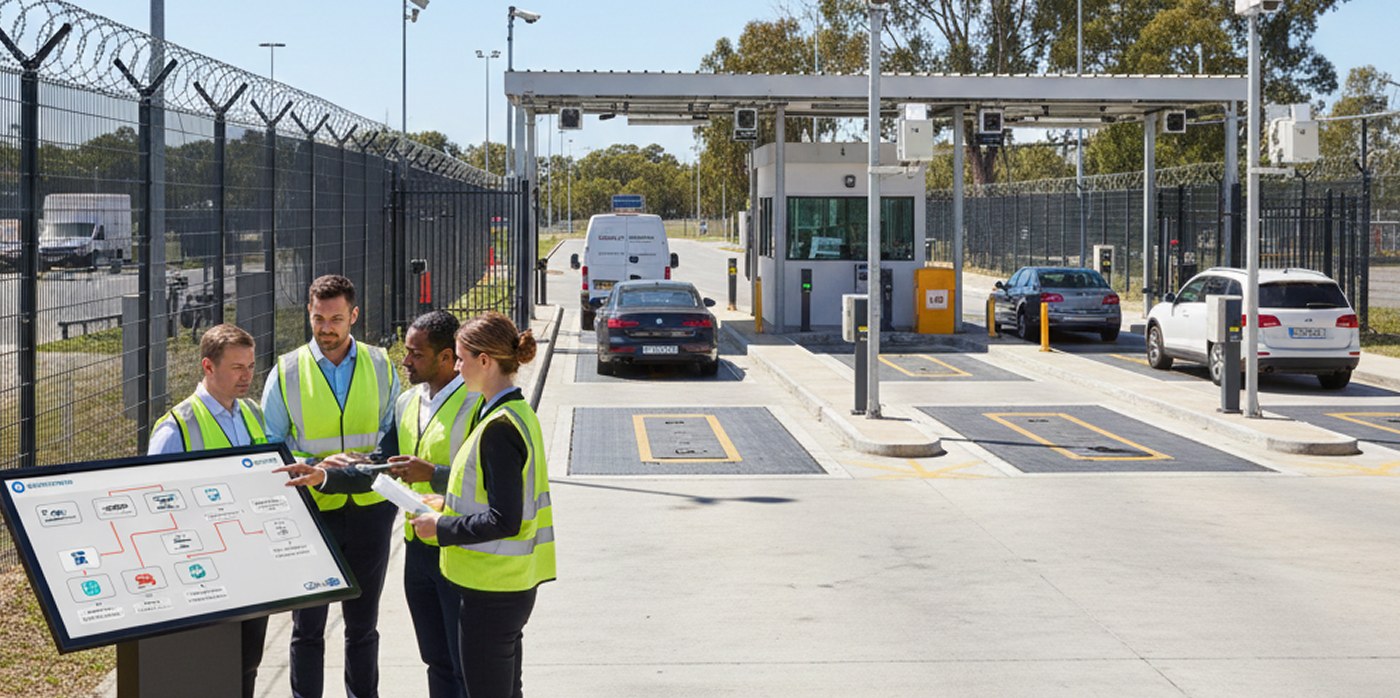
An Under Vehicle Surveillance System (UVSS) is a security imaging solution designed to capture clear, real-time images and video of a vehicle’s undercarriage as it passes over a scanning station. Because it exposes areas that are not typically visible through a regular inspection, UVSS allows security personnel to identify prohibited items, signs of tampering, and other potential threats. The deployment of a UVSS enhances security perimeters by supporting controlled vehicle movement and protecting assets within a secured facility.
Selecting the right UVSS for a facility requires very careful consideration of operational environmental as well as security requirements. Facilities differ significantly in terms of traffic volume, threat exposure and regulatory obligations. Let’s discuss the key factors that should be evaluated to ensure the selected UVSS aligns with the facility’s risk profile and operational demands.
A comprehensive security assessment is the starting point for any UVSS deployment. Low-risk facilities such as office complexes or commercial premises may require only basic imaging and manual review capabilities. In contrast, high-risk environments including airports, shipping, ports, military bases, and critical infrastructure demand advanced UVSS solutions with enhanced analytics, higher imaging performance, and seamless integration into broader security ecosystems. Understanding the anticipated threat level helps define the functional and performance requirements of the UVSS.
Lighting and environmental performance play a significant role in under-vehicle imaging. Vehicle undercarriages are often uneven and poorly lit, making consistent illumination essential. Effective UVSS solutions incorporate integrated lighting positioned to minimize shadows and provide uniform coverage. For outdoor installations, durability and environmental protection must also be considered to ensure reliable performance under varying weather conditions.
Assessing the analytical and detection capabilities of the software is an important consideration in choosing a UVSS. Modern software should automatically flag anomalies by comparing current scans against a database of historical images. Key features to look for include an intuitive user interface and seamless data sharing with existing access control and alarm systems. When evaluated together, advanced system analysis provides an opportunity to enhance detection speeds while reducing the level of operator fatigue.
A comprehensive security solution does not exist alone, and the UVSS solution that best meets the needs of your organization should be integrated into your overall security solution, including: Video Management System (VMS), Access Control System (ACS), Perimeter Alarms, and Gate Automation Systems. It is essential to ensure that there is compatibility between systems and that data can be shared seamlessly between systems to create an integrated security solution.
AI Powered UVSS has Machine Learning (ML) and anomaly detection algorithms at security checkpoints, critical infrastructure security gates, port-of-entry facilities, and other high-security facilities. By utilizing AI/ML, under-vehicle surveillance can more efficiently cure delays at checkpoints, identify hidden threats and safety hazards as well as maintenance issues far more quickly and with considerably less false negatives than by only relying on human visual surveillance.
Ease of installation and long-term maintenance should also be evaluated. Factors such as whether the system requires civil work, whether it is surface-mounted or in-ground, and the availability of power and network infrastructure all influence deployment complexity. Systems that are easier to install and maintain can reduce downtime and lower TCO (total cost of ownership) over the system’s lifecycle.
A security system is only as good as the support behind it. Evaluate warranty terms, availability of training for operators, technical support response times & firmware and software update policies. Reliable suppliers can support & ensure your system stays operational and effective over time.
There are a few different approaches to under-vehicle surveillance system technologies:
Installed flush with the road surface, these are ideal for permanent checkpoints. They provide stable imaging but require significant installation work.
Placed on the road surface, these systems are easier to install and are suitable for temporary or mobile checkpoints.
Mobile/Portable Units are made to be deployed quickly and moved frequently; these units are ideal for event security and temporary screening of people, vehicles and cargo items.
CommPort’s UVSS enhances perimeter security by providing clear and consistent under-vehicle imaging, enabling security teams to identify suspicious objects, tampering, or structural anomalies that are not visible through manual inspections.
CommPort’s AI-enabled UVSS assists security operators by automatically highlighting anomalies and deviations in under-vehicle images, reducing reliance on purely manual inspection.
Designed to support smooth traffic movement, CommPort’s UVSS allows vehicles to be inspected without unnecessary delays or latency, helping facilities maintain operational efficiency even during peak hours.
The system supports centralized monitoring and streamlined workflows, allowing operators to review inspections efficiently and respond quickly to potential threats.
CommPort’s UVSS AI is built for reliable deployment across a range of environments, including airports, ports, industrial facilities, and critical infrastructure sites.
Choosing a UVSS is a strategic investment in your facility’s safety. By thoroughly assessing your risk profile, environmental challenges, and integration needs, you can implement a solution that detects threats effectively without disrupting traffic flow.
Selecting the right UVSS provides peace-of-mind, as well as allowing your employees to use their capabilities for detecting threats during operation hours and to maintain the security of your facility.


