
 USA
USA
 USA
USA
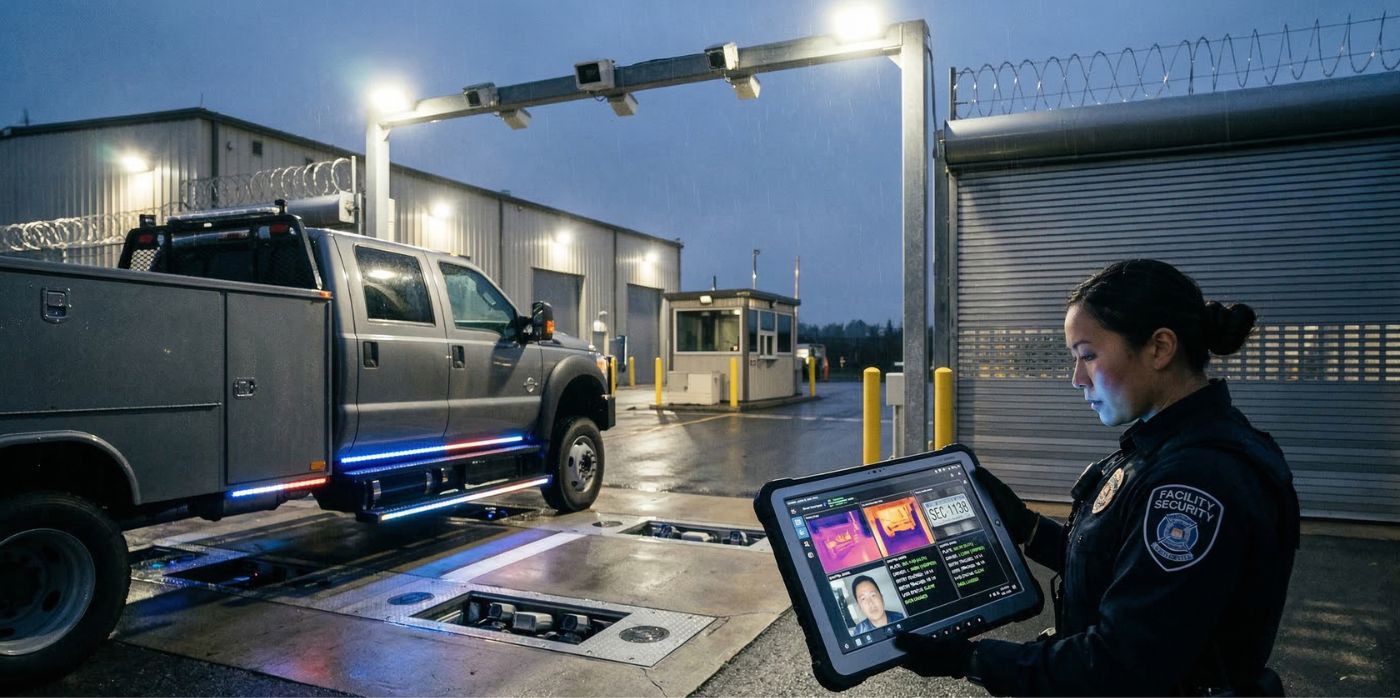
High-security facilities operate on a simple truth that is, if access cannot be proven, it cannot be trusted. In the case of a defense installation, the perimeter of an airport, a data centre, or critical infrastructure; every vehicle and personnel movement must be verifiable, traceable and accessible. Entry and exit records are no longer simply operational logs, they are also security evidence.
Access logs and badge swipes provide data about each transaction or log, but they do not provide any visual proof regarding an individual’s identity or movement. Security teams now require not only that an image is captured, but also interpretation of that movement with intelligence; detection of anomalies (not only timing); and linking the image with the time stamp and the individual’s identity.
Fundamental requirements of good operational designs would include visual proof of access rather than just access log; time stamped, tamper resistant, evidence; lane/gate level, tagging of individuals at the time to assist in verifying the validity of the tag, and verifying that the access tag provided access to each gate/lanes.
Regulatory authorities and end user security agencies require visual/timed proof in order to limit disputes between end users and regulatory agencies. Proof can provide a basis to investigate or provide evidence for compliance audits as well as to strengthen accountability between end users and the regulatory agency.
CPUVIS UVIS AI is an intelligent under-vehicle inspection platform delivering real-time visual verification. It provides high-resolution imaging that captures fine undercarriage details needed for evidentiary-grade inspection. CPUVIS AI models analyze under-vehicle imagery to detect anomalies and confirm normalcy instantly.
If an AI detects an unusual amount of deviation from a vehicle’s position beneath the vehicle, this will lead the AI to consider that the vehicle did not enter safely. Multiple entrance/exit lanes/entry/exit gates will all have accurate projections of vehicle entry-exit through all of those lanes without blind spots.
Each time an operator scans an entrance/exit gate, their scan will be automatically recorded and timestamped based upon hourly timestamp that has already been verified by the operator. The image will not only represent the time but also the identity of any vehicle that passes through. Additionally, the operator will also log other attributes of the vehicle; license plate number, vehicle type, vehicle model and vehicle color.
Combining both UVIS and ANPR creates a layered security model that reduces the number of false clears and adds a multilayered validation method to determine that vehicle entered safely into the secure area.
CPAS AI can accurately verify whether a vehicle has either entered or exited a secure area. Even in cases where vehicles are heavily congested in traffic or in very low visibility conditions, AI can maintain reliable tracking of the vehicle.
Future AI approaches will predict risk based on movement patterns. This will allow for AI-generated risk detection prior to the occurrence of security breaches, as well as allow for pre-emptive risk scoring to facilitate early detection. Commport’s product roadmap includes next-generation intelligent security systems that provide intel, proactive perimeter security and are based on future-driven technologies.
Proof of entry and exit tracking refers to a security process that records and verifies every vehicle or personnel movement in and out of a restricted facility. It combines visual evidence, timestamps, and identity data to ensure that each access event can be authenticated and audited when required.
Traditional access logs and badge systems only record transaction data such as entry time or access approval. However, they do not provide visual confirmation of the vehicle or person, which is essential for verifying identity, detecting anomalies, and supporting security investigations or compliance audits.
UVIS AI captures high-resolution images of a vehicle’s undercarriage and analyzes them using AI models. The system automatically detects anomalies, records timestamps, and links visual evidence with vehicle identity details, enabling reliable proof of entry and exit.
When UVIS is integrated with Automatic Number Plate Recognition (ANPR), the system can match the undercarriage image with the vehicle’s license plate and other identification details. This layered security approach reduces false clearances and ensures accurate vehicle verification.
Yes. UVIS AI systems are designed to maintain accurate vehicle tracking even in congested traffic or poor visibility conditions. Advanced AI models help identify vehicles and detect anomalies without interrupting the flow of traffic.
UVIS AI is widely used in airports, seaports, military bases, government facilities, border checkpoints, and data centers where strict vehicle verification and audit-ready access records are critical for maintaining high levels of security.


