Choosing the Best Under Vehicle Inspection System for Border Checkpoints
A border crossing is not a higher-volume building entrance. Traffic is more varied, hours are longer, and the equipment is exposed to heavy axle loads, dust, water and temperature extremes. The right system is the one that fits the crossing, not the one with the longest specification sheet.
Border checkpoints have a difficult operating requirement: inspect vehicles thoroughly without allowing the inspection process itself to become the bottleneck. A system that performs well at a private facility may not be appropriate for a border crossing handling passenger cars, buses and heavily loaded commercial vehicles across several lanes and in changing weather conditions.
For that reason, the “best” under vehicle inspection system (UVIS) for a border checkpoint is not defined by a single specification. It is the system that can maintain usable undercarriage imaging, reliable vehicle identification and an auditable inspection record while fitting the checkpoint’s traffic volume, lane layout, climate and security workflow.
This guide outlines the criteria border authorities and security teams should evaluate before selecting a UVIS, and explains where CPUVIS fixed, multi-lane and portable inspection solutions fit within those requirements.
Why Border Checkpoints Require a Different UVIS Approach
A border crossing is not simply a higher-volume version of a building entrance. Its traffic is more varied, its operating hours can be longer, and the consequences of an inspection failure are significant. The system may also be exposed continuously to heavy axle loads, dust, water, temperature extremes and frequent vehicle movement.
A border-grade UVIS therefore needs to be evaluated as both an imaging system and part of the wider checkpoint infrastructure. The relevant questions are operational:
How many vehicles must be processed during normal and peak periods?
Can the system inspect passenger vehicles, buses and heavy trucks?
Does vehicle speed materially affect the inspection image or the time available to the operator?
Can several lanes be supervised from a common control environment?
Can the undercarriage image be tied to the correct license plate and inspection record?
Can previous inspections of the same vehicle be retrieved and compared?
Will the equipment continue to operate reliably in the checkpoint’s climate and road conditions?
The answers to those questions should drive system selection before any individual model is specified.
Section 02
Six Factors to Consider When Choosing a Border UVIS
1. Vehicle Throughput
At a busy border, security screening has to coexist with traffic management. A system that requires unnecessary stops or manual intervention for every vehicle can quickly create queues during peak periods.
When comparing systems, review the supported vehicle speed, how quickly images become available to the operator, whether the system can support continuous inspection, and how it behaves when several lanes are active at the same time. CPUVIS publishes support for vehicle speeds up to 75 km/h (45 mph) on applicable CPAS configurations; the final operating speed should always be matched to the selected system, site layout and security procedure.
2. Image Quality and Inspection Usability
High resolution alone does not make an inspection image useful. The operator needs an undercarriage view that can be reviewed quickly and consistently under real checkpoint conditions. Image capture, lighting, vehicle speed and processing architecture all influence how readily the operator can identify an object or visible change that requires secondary inspection.
CPUVIS uses Color Area Scan Technology across its core fixed-system range and, on applicable CPAS configurations, supports full-frame imaging without the conventional stitched-image workflow used by many older architectures. This should be reviewed together with the actual operator interface and representative undercarriage images during technical evaluation.
3. Heavy Vehicle and Load Capability
Border traffic often includes commercial vehicles that are significantly heavier than the passenger traffic seen at a typical enterprise gate. The mechanical design of the scanner, roadway installation and load rating therefore matter as much as the camera specification.
CPUVIS publishes a standard load capability up to 78 tons on applicable fixed systems, with higher-load options available up to 110 tons. The required rating should be confirmed against expected axle loads, vehicle classes and civil works before final specification.
4. Weather and Environmental Tolerance
Border equipment may operate outdoors around the clock. Heat, freezing temperatures, water, dust and road debris can all affect long-term reliability. Procurement teams should therefore review the environmental protection of the scanner itself, operating-temperature limits, drainage requirements, enclosure protection and serviceability.
CPUVIS publishes IP68 protection on applicable fixed scanning equipment and an operating range of approximately -40°C to +74°C for specified configurations. Because exact ratings vary by component and model, the final proposal should identify the relevant environmental specifications for the selected border deployment.
5. ANPR / License Plate Recognition Integration
An undercarriage image is far more useful when it is tied to the correct vehicle identity. At a border checkpoint, ANPR/LPR can associate the scan with the license plate, date and time, lane and inspection record, allowing operators to retrieve previous visits and maintain a consistent audit trail.
The practical workflow should be considered end to end: plate captured, vehicle identified, undercarriage scanned, inspection linked, previous records retrieved when available, operator decision recorded, and the completed inspection retained for authorized review.
6. Multi-Lane Management and Searchable Records
A system that works well in one lane may become difficult to manage when a checkpoint expands to four, six or more inspection lanes. High-volume border facilities should evaluate how inspections are routed to operators, whether multiple lanes can be monitored centrally, how records are stored and how quickly a previous vehicle can be found.
CPAS ML/MG is designed specifically for multi-lane and multi-gate environments, allowing inspection activity from several vehicle lanes to be managed within a centralized operating environment.
Section 03
What an Effective Border Vehicle Inspection Workflow Looks Like
1. Vehicle approaches the inspection lane and identifying information is captured.
2. The undercarriage is imaged as the vehicle passes the scanning point.
3. The system associates the inspection with the correct plate, lane, date and time.
4. The operator reviews the current image and any available historical inspection record.
5. Any visible anomaly or change can be escalated for secondary inspection.
6. The completed inspection is retained in the database for authorized search, audit and future comparison.
The value of an automated UVIS at a border is therefore not limited to the scan itself. The system becomes part of the checkpoint’s vehicle-screening record and provides context for repeat crossings.
Section 04
Fixed, Multi-Lane or Portable: Which Deployment Model Fits the Border?
Deployment Model
Best Fit
Key Consideration
Fixed / permanent UVIS
Primary border inspection lanes with predictable traffic flow
Civil works, lane design, vehicle load and long-term throughput
Networked multi-lane UVIS
Busy borders with several gates or lanes
Centralized monitoring, operator workload and resilient network design
Portable / mobile inspection
Temporary posts, secondary checks or locations where permanent infrastructure is impractical
Lower throughput; intended for flexible/manual inspection rather than primary automated lanes
There is no single deployment format that is right for every crossing. Permanent automated systems are generally best suited to repeatable primary-lane screening, while portable inspection equipment can complement them for secondary, temporary or difficult-to-access inspections.
Section 05
Why Multi-Lane UVIS Matters at High-Volume Border Crossings
A multi-lane border is a system-level problem. Four scanners operating independently can create four separate inspection workflows, four sets of records and unnecessary duplication for operators. A networked architecture allows those lanes to feed a common operating environment.
For a high-volume site, this can simplify supervision, record retrieval and expansion. It also makes it easier to standardize how operators review inspections across different gates.
CPAS ML/MG is intended for these environments, including borders, airports, ports and other locations where several inspection points must be managed together.
Section 06
Integrating UVIS With ANPR and the Wider Border Security Ecosystem
Border security decisions are rarely based on one sensor. The under-vehicle inspection should be capable of operating within the broader checkpoint environment rather than as an isolated camera system.
Depending on project architecture, the inspection environment may include:
License Plate Recognition (LPR/ANPR)
driver or vehicle overview cameras
access-control and barrier systems
central monitoring workstations
authorized vehicle or watch-list databases
searchable inspection history and operator notes
The exact integration scope should be defined during the site and system-design stage. Procurement documents should distinguish clearly between standard capabilities, optional modules and third-party interfaces.
Section 07
Technical Requirements for a Border Checkpoint UVIS
Requirement
Why It Matters at a Border
CPUVIS Reference Capability*
Vehicle speed
Reduces unnecessary inspection bottlenecks
Up to 75 km/h / 45 mph on applicable CPAS configurations
Imaging performance
Determines how quickly usable inspection imagery is captured
Up to 900 FPS depending on configuration
Vehicle load
Borders routinely process heavy commercial vehicles
Up to 78 tons standard; higher-load option up to 110 tons on applicable systems
Environmental protection
Scanner may operate outdoors continuously
IP68 on applicable fixed scanning equipment
Operating temperature
Border sites may face extreme climates
Approx. -40°C to +74°C on specified configurations
LPR / ANPR
Associates the scan with vehicle identity
Integration available
Multi-lane architecture
Supports high-volume, multi-gate operations
CPAS ML/MG
Inspection history
Supports repeat-vehicle review and audit
Searchable inspection database
Section 08
CPUVIS Solutions for Border Checkpoints
Fixed · high-security
CPAS UVIS Systems
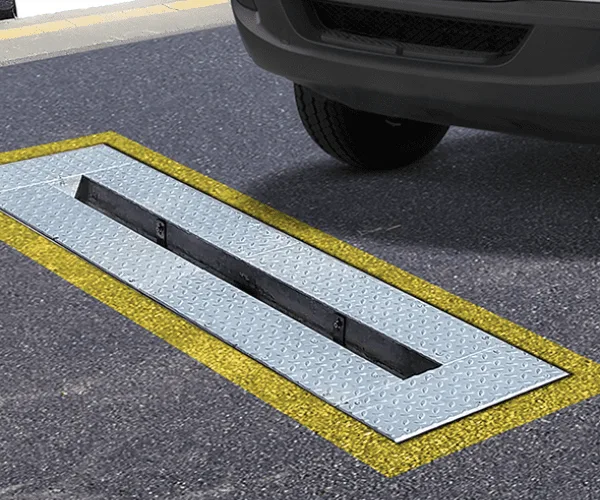
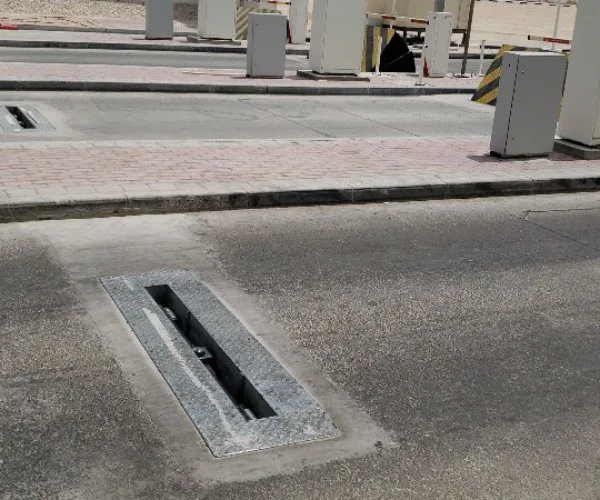
CPAS UVIS is intended for permanent vehicle checkpoints where automated undercarriage capture, vehicle data and inspection records need to be managed as part of a repeatable security workflow. It is the natural starting point for a fixed primary inspection lane.
Best suited forPermanent controlled entrances and high-security facilities.
For border crossings operating several lanes or gates, CPAS ML/MG provides a centralized architecture for managing inspection activity across multiple scanning points. This configuration is most relevant where vehicle volume and operator coordination make independent single-lane systems inefficient.
Best suited forSeveral lanes or gates managed from one control environment.
FLEX-HH-700 provides a portable inspection capability for secondary screening, temporary checkpoints and situations where a permanent scanner is not practical. It is a complementary tool rather than a substitute for a high-throughput automated primary lane.
Best suited forPatrols, temporary checkpoints and secondary inspection.
Automated UVIS vs Manual Mirror Inspection at a Border
Inspection Area
Manual Mirror Inspection
Automated Border UVIS
Process
Operator moves and positions the mirror manually
Undercarriage image captured as part of the lane workflow
Consistency
Varies by operator, lighting and access
More repeatable image-capture process
Traffic handling
Can be slow when every vehicle requires a full manual check
Designed to support higher-throughput screening
Vehicle identity
Normally recorded separately
Can be linked to LPR / inspection record
Historical record
Usually limited
Searchable digital inspection history
Repeat-vehicle comparison
Difficult
Previous inspections can be retrieved where configured
Manual mirrors remain useful for secondary inspection and as a flexible field tool. Their limitation at a busy border is scalability: maintaining a consistent, auditable manual inspection process across large numbers of vehicles is difficult. Automated UVIS is most valuable when the checkpoint needs repeatability, retained evidence and higher throughput.
Section 10
Questions to Ask a UVIS Supplier Before Procurement
A useful technical evaluation should go beyond a product brochure. Before specifying a system for a border crossing, ask the supplier to address the following points in writing:
1. What vehicle throughput and speed can the proposed configuration support under real operating conditions?
2. Can it inspect passenger vehicles, buses and the heaviest commercial vehicles expected at the site?
3. What axle/load limits apply to the installed scanner?
4. How is the equipment protected against water, dust, road debris and temperature extremes?
5. How does vehicle speed affect image capture and operator review?
6. Can the system integrate with the checkpoint’s existing ANPR/LPR and access-control infrastructure?
7. Can several lanes and gates be managed from a centralized operating environment?
8. How are inspection records stored, searched and retained?
9. Can previous inspections of the same vehicle be retrieved or compared?
10. What happens operationally if a lane, scanner or network connection is temporarily unavailable?
11. What installation, acceptance testing, training, warranty and maintenance support are included?
For a border project, these answers are often more valuable than a single headline specification because they reveal how the proposed system will behave as part of the complete checkpoint.
Section 11
Border UVIS Evaluation Checklist
Capability
Basic UVIS
Border-Grade Requirement
Undercarriage imaging
Expected
Expected
Moving-vehicle inspection
Varies
Important for primary lanes
Heavy-vehicle load capability
Varies
Required where commercial traffic is present
Outdoor environmental protection
Varies
Required for exposed installations
LPR / ANPR integration
Optional
Strongly recommended
Searchable inspection history
May be limited
Important for audit and repeat traffic
Multi-lane management
Often limited
Critical for high-volume crossings
Centralized operator environment
Varies
Recommended for multi-gate sites
Repeat-vehicle comparison
Varies
Valuable for frequent traffic
Expandable architecture
Varies
Important for phased border expansion
Planning a New Border Checkpoint or Upgrading Existing Vehicle Inspection Lanes?
A border UVIS should be specified around the site’s actual traffic, lane architecture, vehicle mix, climate and security workflow. Share your expected vehicle volume, number of lanes, heaviest vehicle class, existing ANPR/access-control systems and operating environment with the CPUVIS technical team. We can help determine whether a fixed CPAS system, a networked CPAS ML/MG architecture or a portable inspection capability is the better fit.
What is the best under vehicle inspection system for a border checkpoint?
There is no single UVIS configuration that is best for every border. The right system depends on lane count, vehicle volume, commercial-vehicle traffic, climate, required integrations and the checkpoint’s inspection workflow. Busy crossings generally benefit from automated moving-vehicle inspection, ANPR integration, searchable records and centralized multi-lane management.
How fast can vehicles pass through a UVIS?
Supported speed varies by manufacturer and configuration. CPUVIS publishes operation up to 75 km/h (45 mph) on applicable CPAS systems. The final operating speed should be validated against the selected model, lane design and security procedure rather than treated as a universal checkpoint speed.
Can a UVIS inspect trucks and buses?
Yes, provided the selected scanner and civil design are rated for the expected vehicle classes and loads. Border projects should confirm axle/load limits and roadway requirements before specifying the system.
Can UVIS integrate with ANPR or license plate recognition?
Yes. Integrating ANPR/LPR allows the undercarriage image to be associated with the correct vehicle identity, timestamp and inspection record, which is especially useful for repeat traffic and audit requirements.
Is a multi-lane UVIS better for busy border crossings?
For crossings operating several lanes or gates, a networked multi-lane architecture can simplify supervision, record management and operator workflow. CPUVIS CPAS ML/MG is designed for multi-lane and multi-gate environments.
Can an under vehicle inspection system operate in extreme weather?
Systems intended for exposed border environments should be selected according to their environmental protection and operating-temperature ratings. CPUVIS publishes IP68 protection and wide-temperature operation on applicable fixed configurations; the final model rating should be confirmed during project design.
Can repeat vehicles be compared with previous inspections?
Where inspection records are retained, operators can retrieve prior vehicle data and imagery for review. This is particularly useful at borders handling regular commercial fleets, buses or other recurring traffic.
Should a border use a fixed or portable UVIS?
Permanent fixed systems are generally better suited to repeatable, higher-throughput primary-lane screening. Portable systems are useful for secondary inspections, temporary locations or areas where permanent civil infrastructure is not practical.
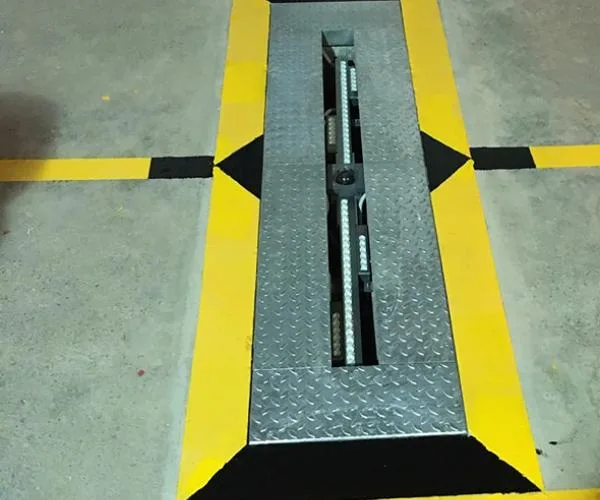
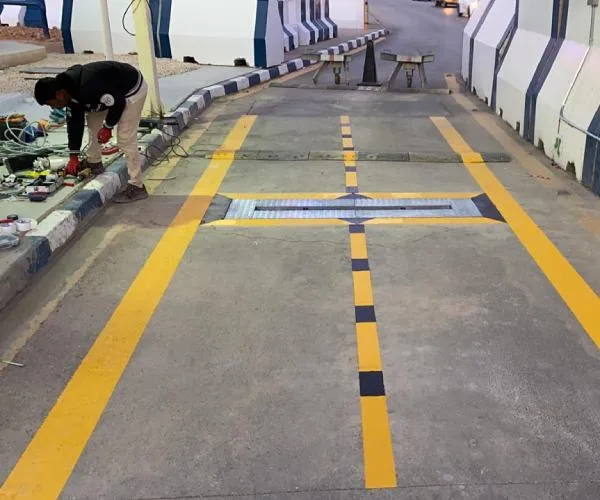
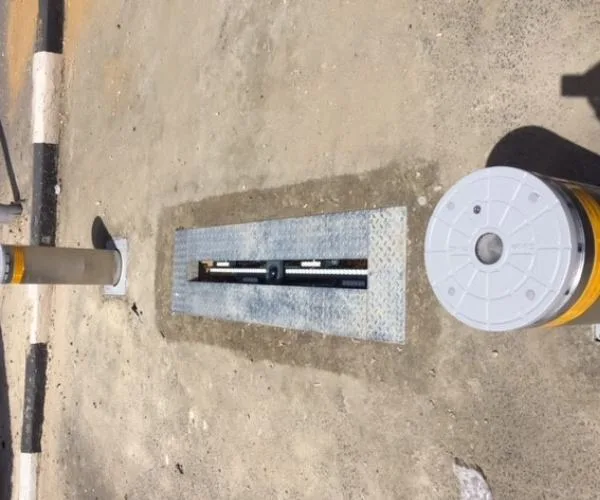
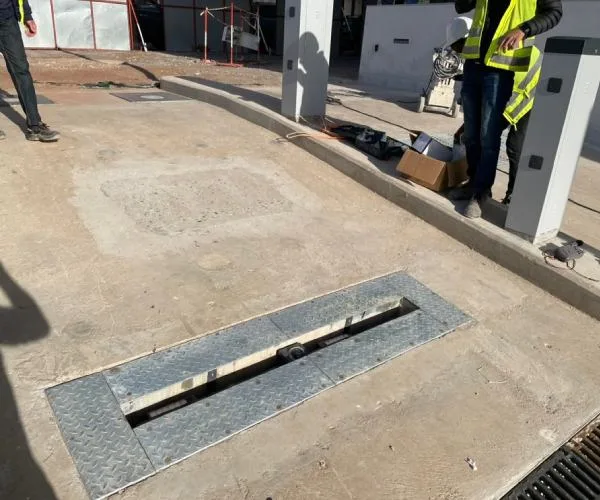
Our UVSS Installations
Planning a new vehicle checkpoint, or upgrading one?
Send us your vehicle volume, number of lanes, vehicle types, existing checkpoint equipment and site conditions. Our technical team will tell you whether a fixed CPAS system, a multi-lane architecture or portable inspection is the better fit.